

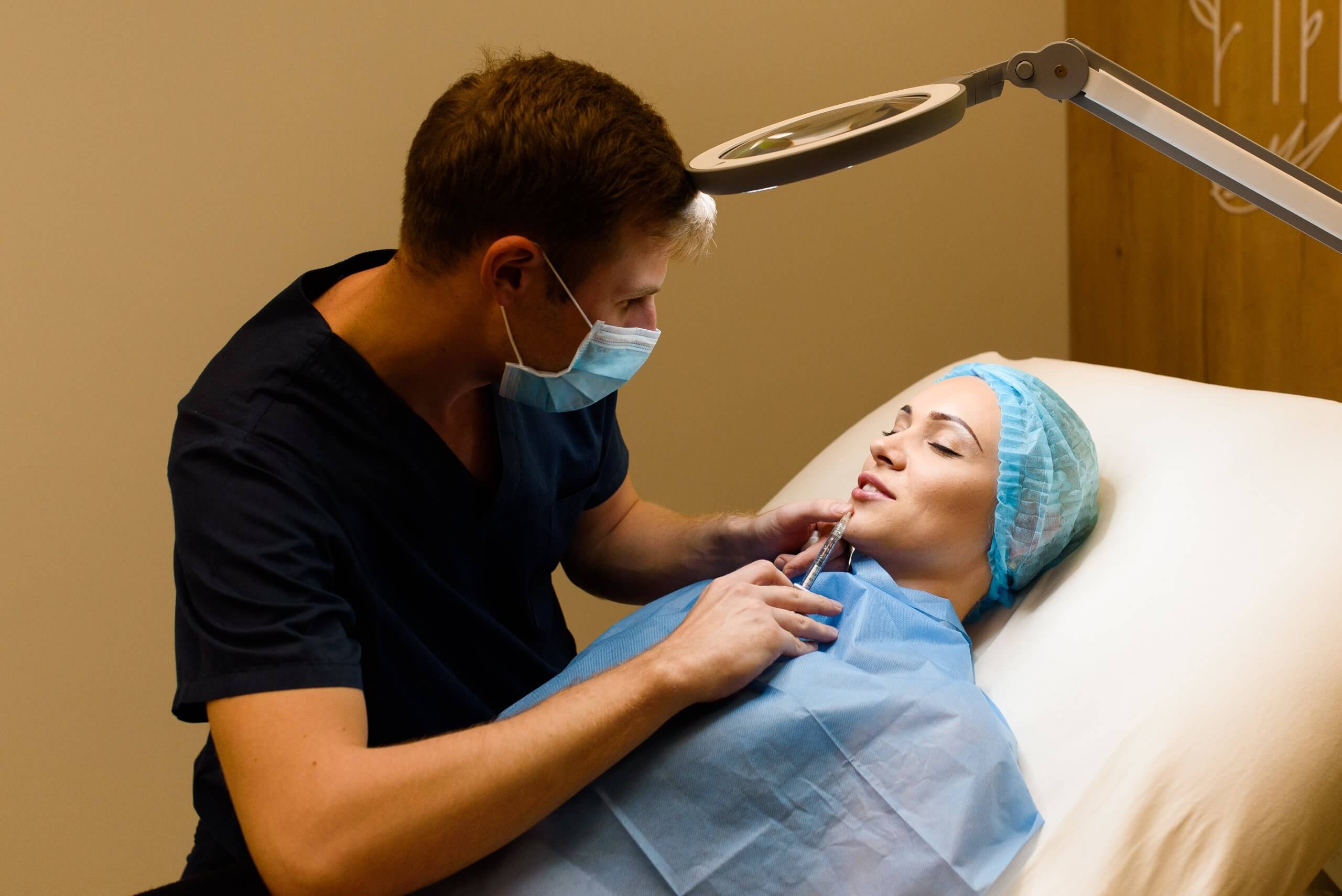
Medical aesthetics has become incredibly popular in recent years. Procedures such as Botox, fillers, mesotherapy, and PRP are now known not only to a specific segment but to almost everyone. These applications are constantly mentioned on social media, in the environment, and in salons. However, this popularity has brought with it a very serious problem: everyone trying to do everything.
However, medical aesthetics, as the name suggests, is a medical field. It cannot be equated with cosmetic care and has serious limitations. Ignoring these limits has very serious consequences, both legally and in terms of health.
What Medical Aesthetics Is and Is Not
Medical aesthetics includes procedures performed on the human body via injection, involving intervention under the skin, and requiring anatomical and medical knowledge. Botox, fillers, PRP, mesotherapy, and lipolytic injections fall into this category. These are not simple “care” procedures. Direct intervention is made to vessels, nerves, muscles, and connective tissues.
Therefore, medical aesthetics is not the field of activity of beauty salons. Beauty salons provide care; medical aesthetics, on the other hand, is a medical intervention. Mixing these two areas is one of the biggest mistakes.
Authority is Very Clear in Turkey
In Turkey, who can perform medical aesthetic procedures is clearly defined by laws and regulations. Injection procedures such as Botox, fillers, PRP, and mesotherapy can only be performed by physicians. Period.
It is strictly forbidden to perform these procedures in beauty salons. Statements such as “I have a doctor with me”, “The doctor taught me”, “I’m just applying it” have no legal equivalent. Authority is personal and cannot be delegated. It is clearly a crime for someone without authority to perform these procedures.
Health Risks Are Not to Be Taken Lightly
Violation of these limits poses serious risks not only for the business but also for the person undergoing the procedure. A filler applied in the wrong place can lead to vascular occlusion. An injection performed with the wrong technique can cause facial paralysis. Even worse, in some cases, irreversible consequences leading to blindness can occur.
These are not theoretical risks. These are real cases and occur every year. Such complications can only be managed with medical knowledge and in healthcare settings with emergency intervention capabilities. Beauty salons do not have these conditions.
The “Everyone Does It” Fallacy
One of the most frequently heard sentences in the sector is: “Everyone does it.” This is the most dangerous defense. Because it has no legal meaning. When there is an inspection or a complaint, saying “others are doing it too” does not save anyone.
In inspections made upon complaint, businesses can be sealed, high fines can be imposed, and legal proceedings can be initiated. If the person undergoing the procedure has suffered damage, compensation lawsuits and criminal liability also come into play. These processes can result in the complete closure of a business.
A Beauty Salon is Not the Same as a Clinic
The clearest fact is this: the work done by a beauty salon and a clinic is not the same. One’s field is care, the other’s field is medical intervention. Exceeding this limit is not only a legal violation; it is also a violation of conscientious and humane responsibility.
Every intervention on the human body is serious. Ignoring this seriousness, saying “nothing will happen”, is to risk both human health and one’s own future.
Conclusion
The limit in medical aesthetics is very clear and not open to discussion. Injection procedures such as Botox, fillers, PRP, and mesotherapy can only be performed by physicians. It is forbidden to perform these procedures in beauty salons, and there are severe consequences. Exceeding this limit means paying very high long-term costs for the sake of short-term gains. True professionalism is not about trying to do everything; it is about knowing where to stop.